
I Who Have Never Known Men: Theories Explained
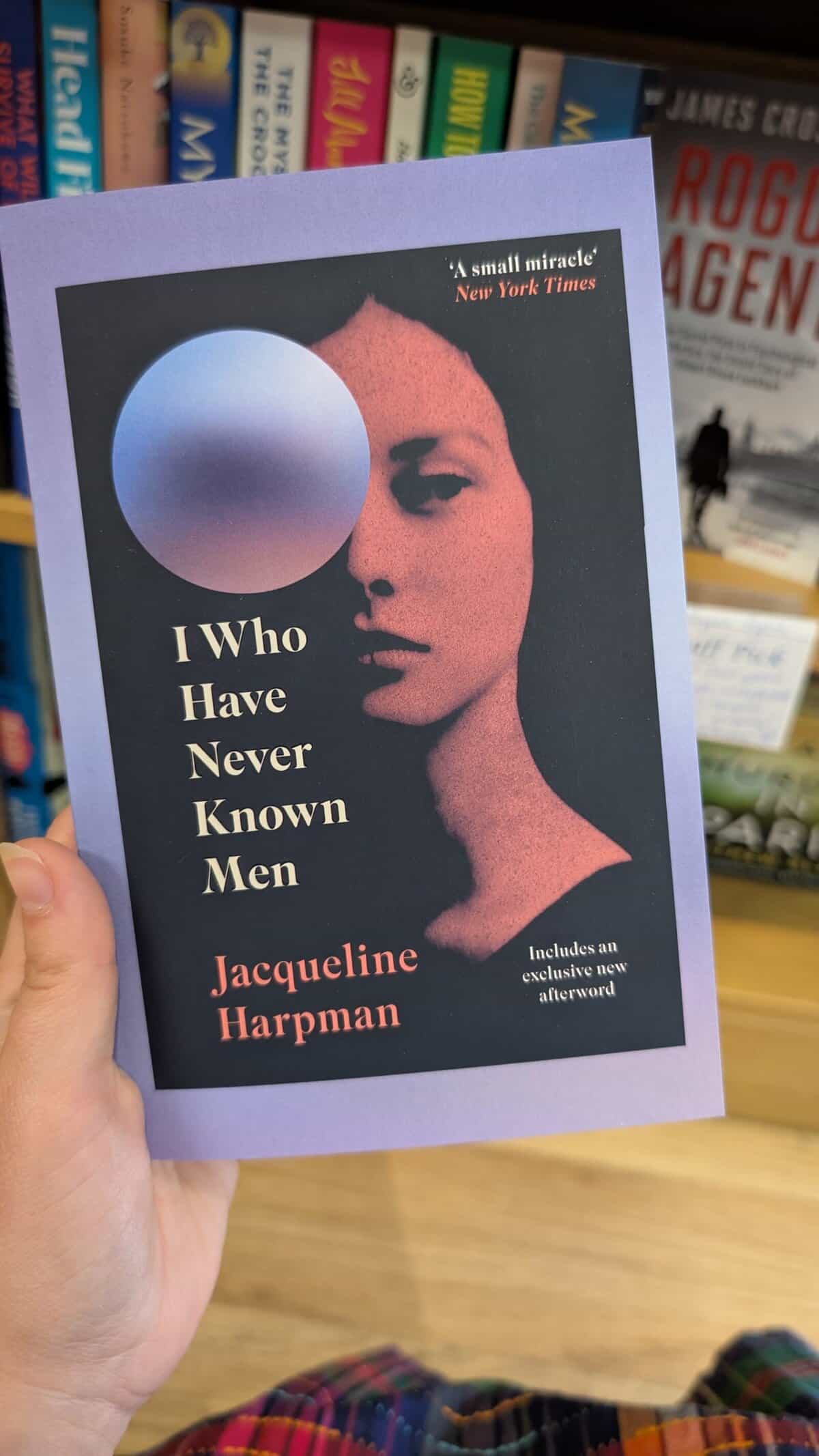
One of my top reads last year was I Who Have Never Known Men by Jacqueline Harpman.
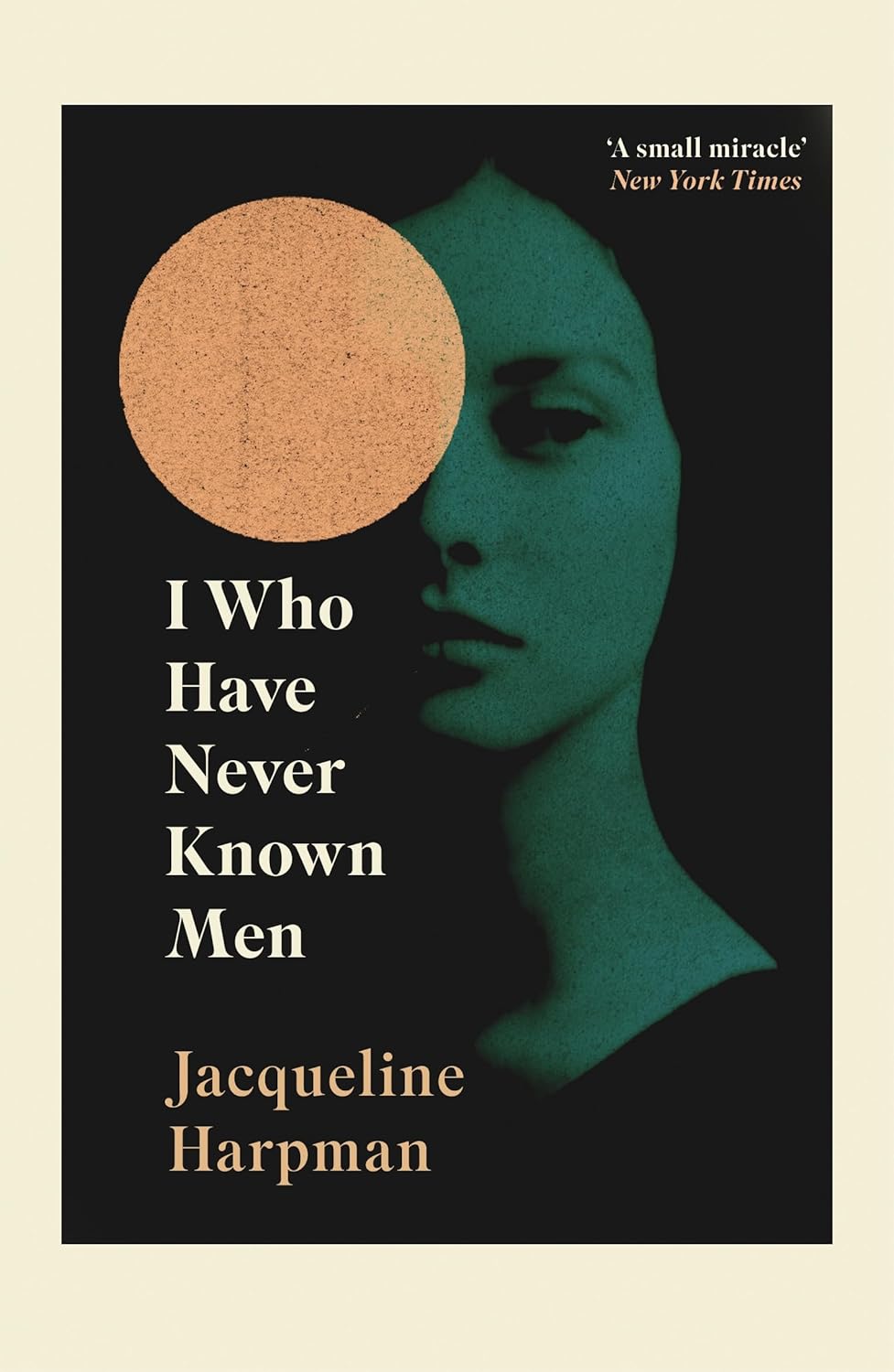
It’s not a long book – it’s 173 pages so fits my criteria for novellas and books under 250 words to hit your reading goal. And it’s not one packed with action. But it absolutely packs a punch for a little book in the dystopian genre.
I love a good “what on earth is happening” kind of mystery book, I love thrillers, and I love isolated dystopian landscapes. So this fit my tastes perfectly. It’s also a brilliant women’s literature book, showing what might happen if women form their own society.
An interesting note: this book was originally written in French, so when you’re reading it in English, you’re reading a beautiful and haunting translation from Ros Schwartz. I think translated books are fascinating and always wonder how well they manage to convey the author’s original words. I haven’t read the French version, and certainly wouldn’t understand the careful nuances in it if I did (GCSE French and a Parisian exchange when I was 15!), but I think it must be such an incredibly interesting job to take an original language and convey all the underlying meaning without just straight up translating the words. Maybe this is my classical languages background (my degree was Latin and Ancient Greek), but it’s definitely something to bear in mind while reading.
In the past couple of years, this book has been blowing up with book lovers on BookTok, calling it a must-read alongside others like The Handmaid’s Tale, for the reasons I mentioned above, but also for many unanswered questions we’re left with after reading.
I love a happy ending to a book, but I also love one which leaves me wondering, and craving more. I Who Have Never Known Men takes this to the extreme! I finished it and spent days trying to figure out what exactly the wider context for desolate landscape was, and trying to pull together the tiny details to build up a bigger picture.
I actually scribbled down loads of notes in a Google doc as soon as I finished reading this one. It’s only now, about 6 months after I read the book, that I’ve managed to pull them together into some semblance of cohesiveness! And I’m still no closer to answering the questions the book throws up.
So here are my thoughts: the big theories, the weirdest talking points and the fine lines between reality and total sci-fi madness in this story.
Where on “Earth” are they?
This is the big one, isn’t it? The unnamed narrator spends her entire life trying to figure out the map of her world, and we’re right there with her. There are a few ways to look at the setting:
1. The Alien World Theory
A lot of people lean into the idea that they are on an alien planet. There’s so much to support this, such as how the length of the days doesn’t quite match up to a normal life on Earth, and the narrator’s journey eventually leads her to a place where the trees just kind of stop. It feels like an alien land that someone tried to terraform but eventually gave up on. Were the thirty-nine women just “pets” for wealthy people setting up a new colony, or specimens brought across the stars to test out a new planet for potential colonisation? Was there a disaster on earth that they started to evacuate people from, and these were the first of them?
2. The Desolate Earth Theory
While many say that it must be an alien planet, I always think there’s the possibility that it could still be earth, just very much changed. Could the women have been “stored” while the earth underwent huge changes, in an attempt to recolonise it again later? This theory reminds me of another book I read and loved called The Mother Code by Carole Stivers (see my full review here) where embryos were implanted into robot mothers so that they can outlive the destruction of humanity.
3. The Simulation or “The Upload”
There’s a wilder theory that the women aren’t even in a physical place. Could they be part of a simulation? Some readers think it’s a metaphysical “storage” unit, like a supercomputer where humanity is kept when the world is unplugged. It would explain how the electricity stays on indefinitely despite no visible power lines. This is very Black Mirror-esque to me – I think I need to create a list of books I’ve read that remind me of Black Mirror, as I kind of love that genre!
4. The Autobiography of the Soul
Is it actually a literal story? Some think it’s a parable of the author’s life or a reflection on the collective trauma of the 20th century. Jacqueline Harpman was a psychoanalyst, and you can really feel that in how she explores human suffering and the way the mind handles a cage underground.
Read more:
- The Best Standalone Fantasy Books (for when you just can’t pick up another series!)
- Best Fantasy Books Like Twilight for Teens To Read
- A Guide to the Best Bookshops in York (Walking Bookshop Tour)
What about the Guards?
The male guards are easily one of the most frustrating part of the book. They are masters of silence – they never speak, never react, and never give anything away. They’re basically blank faces.
- Are they prisoners too? They have no personal possessions. They don’t seem to have a social life or personal possessions. Do they even sleep? They patrol in these strange, random patterns, sometimes for a few hours, sometimes up to eleven.
- Why don’t they rebel? If they are human, why wouldn’t they eventually snap? This makes me think they might not be entirely human, or they’ve been conditioned even more strictly than the women in the underground cage. But how, and why?
- The Vanishing Act: When the alarm sounds, they don’t just run; they disappear. Did they have another bunk deeper underground? Or was it something more high-tech like teleportation?
The Mystery of the Bus and the Instant Death
One of the most chilling scenes is when they find the bus full of people who seem to have died perfectly calmly in their seats. This is a huge clue to the plot of this novel.
If this was an experiment to see if Earth could be repopulated, the bus might be a remnant from an earlier time period. Maybe there was massive radiation exposure, and everyone on that bus died instantly. This supports the idea that the alarm was signalling a new threat, perhaps a recurring spike in radiation or a toxic cloud, which is why the guards bolted.
The Narrator: A Young Woman or Something Else?
Our unnamed narrator is such a unique character because she has no “before.” The older women remember a normal life – they talk about husbands, jobs, and the sun – but she only knows the cage.
There’s a theory that she might be the sterile offspring of a race that is slowly dying out. Here are a few little clues throughout the book:
- Her Growth: She’s described as a young girl for a very long time, and even as she becomes a young woman, her growth seems stunted.
- Biology: She never has her period. While some readers wonder if she is intersex (which is way more common than people think!), it could also be a result of drugs, trauma, or the environment.
- The Mother Theory: There’s a heartbreaking idea that Frances was actually her mother and was pregnant when they were taken. If she was born during interstellar travel, that would explain why she feels so “other” compared to the older women.
Survival and the Abandoned Experiment
How did they survive for so long? The food sources never ran out, and the electricity stayed on. The narrator talks about power stations being outside her field of understanding, but why didn’t the other women look for wires?
It feels like an abandoned experiment. Maybe a billionaire or a government agency started this pet project and then just forgot about it or ran out of money. Maybe they died, leaving the machines running. It’s like a factory that keeps producing even though there are no customers left. They’re running on old systems.
The women also don’t seem to catch infectious diseases, which is a bit of a giveaway that they are in a sterile, controlled environment, likely a different planet where our Earth-germs don’t exist, or somehow those bacteria have been wiped out.
They do, however, have an inordinate level of what appears to be ovarian cancer (at least 2 out of the 40 women, which is higher than it should be). They also lose their hair as they age, it becomes short and sparse, and seem to die earlier than expected. This could be because of the lack of medical care, but could it be the environment, the rivers and the streams, being tainted. Is the air exposing them to dangerous chemicals that are slowly poisoning them? This supports the alarm signalling some kind of threat and the bus being destroyed subject to radiation. Or is it simply trauma?
The Landscape: Why Does the Road Stop?
The narrator is the only one with the curiosity to keep walking. The older women seem to have a limited capacity for critical thinking toward the end but also earlier in the novel, is it drugs in the food? The possibility that they might have lived through space travel or been stored frozen for years? The sheer weight of their current situation? A potentially inhospitable environment that is slowly poisoning them? Or do they have a limited capacity to think outside the box due to their backgrounds – they’re “normal” women who are homemakers or considered to have “lower” jobs. Were they picked for that reason?
She follows the road, but it just ends. She sees rivers and streams but doesn’t always follow them to the sea. It’s possible there were other civilisations just over the next hill, and she simply never came across them. That’s the real tragedy of the book, the unanswered questions that she (and we) have to live with.
Why This Book is Winning at Dystopian Fiction
It’s rare to find a dystopian book that doesn’t rely on easy answers to wrap it all up at the end or a big “chosen one” ending.
Instead, we get a story about basic needs, human suffering, and the way we try to make sense of a strange world. It’s a parable that feels as relevant to anyone feeling trapped by their own lives.
The book’s success really comes down to its open interpretation. It’s not just a story about an underground bunker and an escape; it’s about how we use language and memory to stay human when everything else is taken away.
Was it all for Nothing?
The luxury bunker they find later on, the one with the nice furniture and the “high-up” feel, suggests that someone was supposed to lead this colony or that there was a plan for someone “more important” to join later on. A young guard who would eventually become a king? Or a future leader coming to check in on their little experiement?
In the end, the narrator’s only weapon is her memory. She records it all like a child’s writing in a notebook, even though she knows no one will ever read it.
If you haven’t read I Who Have Never Known Men yet, please go pick it up. It’s a short read, but it will haunt you for a long time. It gives us such new perspectives on what it means to be alive, even when the world is empty.
What’s your theory? Do you think they were on an alien planet, or was it a grand experiment gone wrong? Drop a comment and let’s obsess over these unanswered questions together!




What I find suggestive is that the prisoners are not used in any way as far as we can see. Not sold. No breeding. They are just preserved. And there are sets of male prisoners too, but not as many.
Could they be hostages used to coerce people either to be spies, fighters, or just to be compliant in some totalitarian state? That state fails, perhaps overthrown, so the guards flee.